Creating a compelling color story for fashion often relies on traditional palettes and seasonal trends. However, embracing non-traditional methods can lead to unique and innovative designs that stand out in a crowd. Below, I will discuss a few basics about color stories and then move on to sharing a few few unconventional approaches that I like to use to develop a color story for my design world and process.
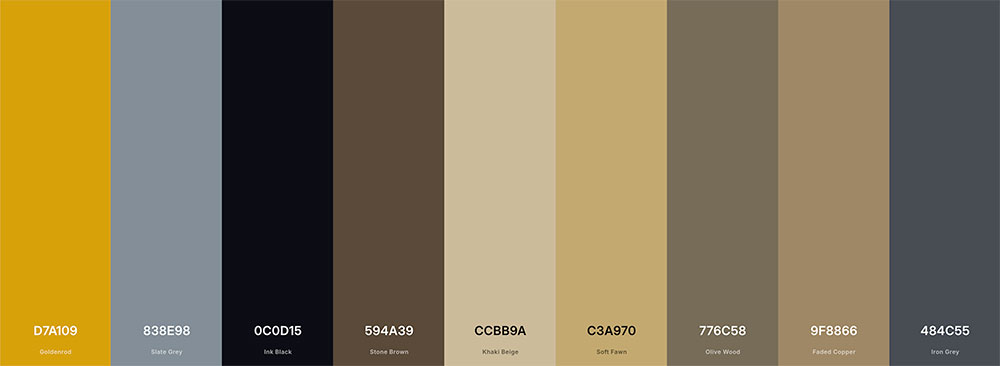
What is a Color Story?
Color Story is a term that is used in the Fashion industry. I would define a color story as a grouping of colors that are curated to be used together in a project. Choices will vary according to personal taste, fashion trends, and the season.
Typically, color is one of the first decisions made when it comes to planning a new garment. Indeed, in the Fashion Industry, everything starts with color, about two years ahead of the garments hitting retail stores. On a personal level, we decide to make a black skirt, or a pink t-top or to create a grouping of garments based on red, white, and teal. Fabric itself is important, but color generally leads the way.
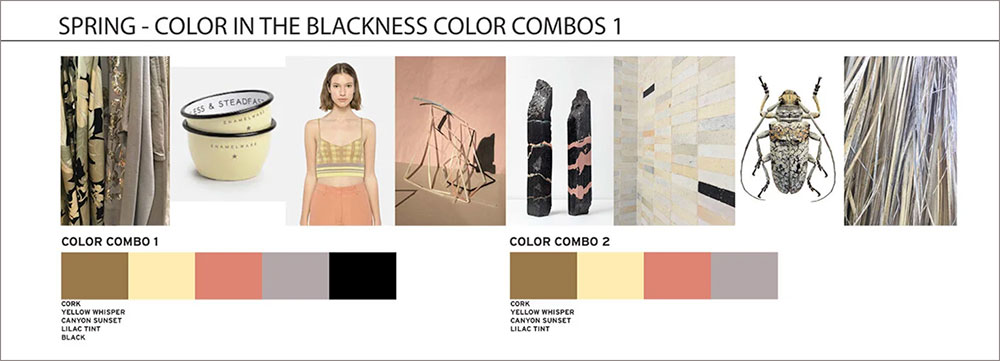
https://www.juliacoreyburns.com/rei-s20-macro-color-trend-seasonal-stories
How Do We as Creators Use Color?
As textile artists/clothing designers, we look to color when we:
- Choose fabrics/yarns to work together in one garment
- Create a small grouping of garments that are held strongly together through color
- Match a print to several solids to build a garment. One doesn’t even need to use the print in the final project. Your single piece of print fabric or a single variegated yarn can suggest the entire color scheme for a new project. This way, the fabric or yarn designer has done the work for you and your only job is to decide that you like it and want to use it.
Approaches to Non-Traditional Color Story Development
Below I am going to share a few approaches I like to use that are intuitive to me and don’t involve any color theory. They are fun and simply add to my creative process.
1. Art and Culture Inspiration
I like to draw inspiration from artworks, cultural artifacts, or historical periods. Visiting museums or looking through books are great ways to be inspired. When I’m viewing art, I have my phone camera ready to go, and if I see a painting I like for its colors, I take a photo (when permitted). This records the color combination for me. Here are a few recent photos I took while at the Museum of Modern Art in New York City in January of this year. Can you see the palette I’m after in each?
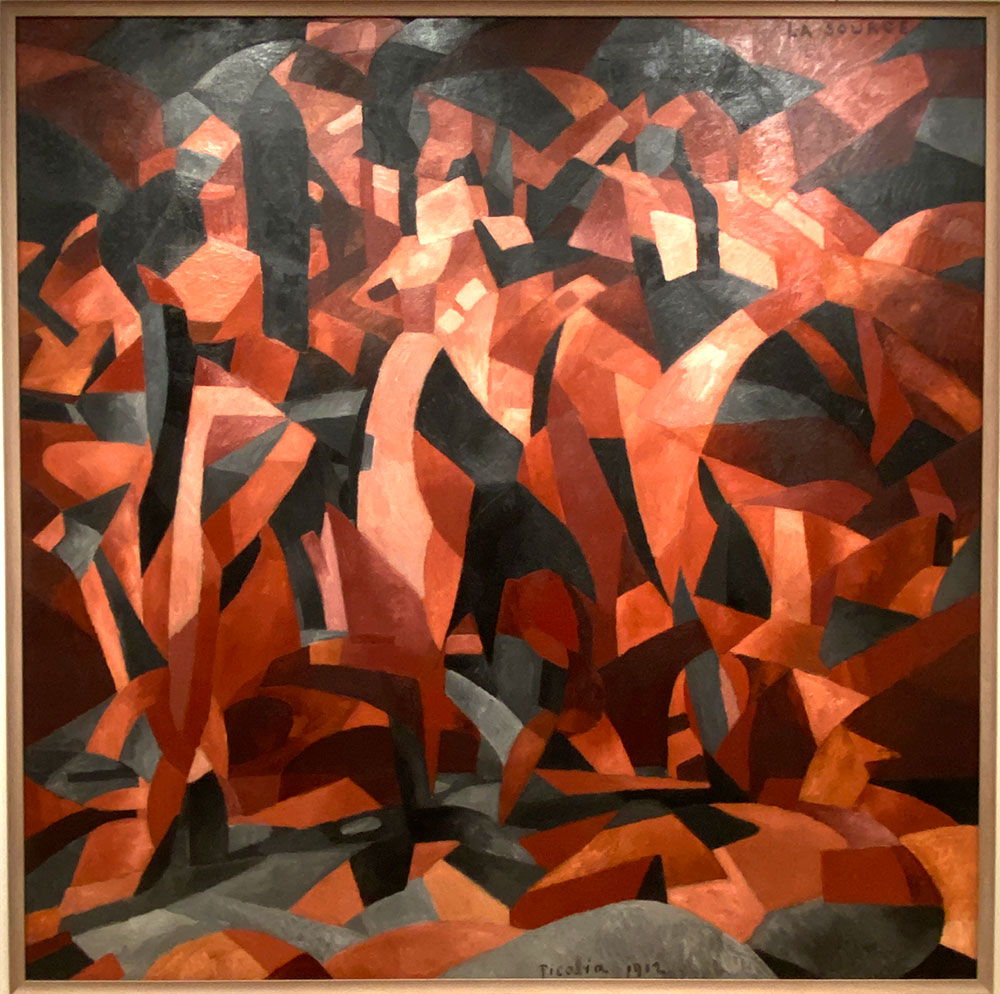
MOMA NYC, January 2026
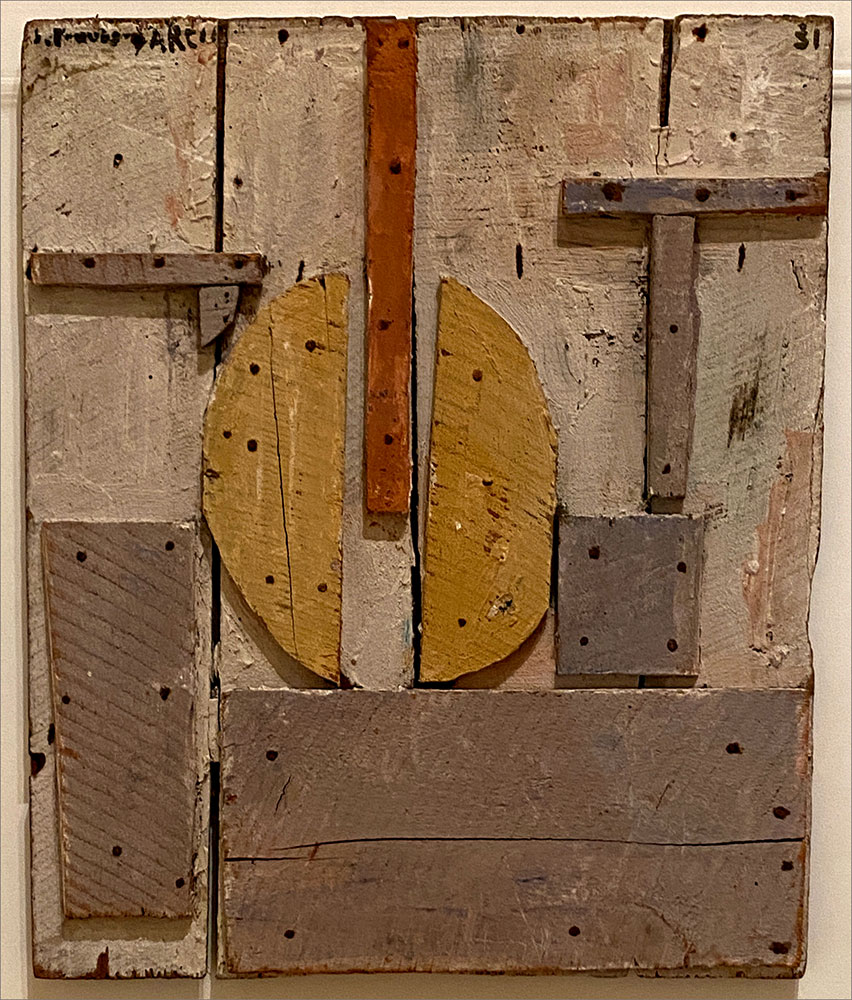
MOMA NYC, January 2026
2. Nature Exploration Through Morning Walks, Hikes, and Gardens
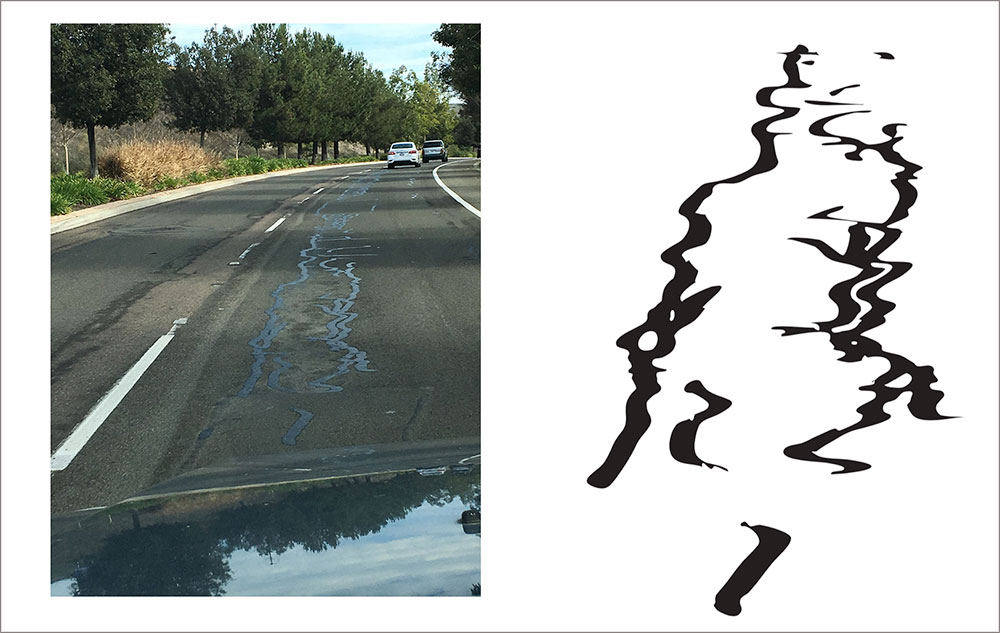
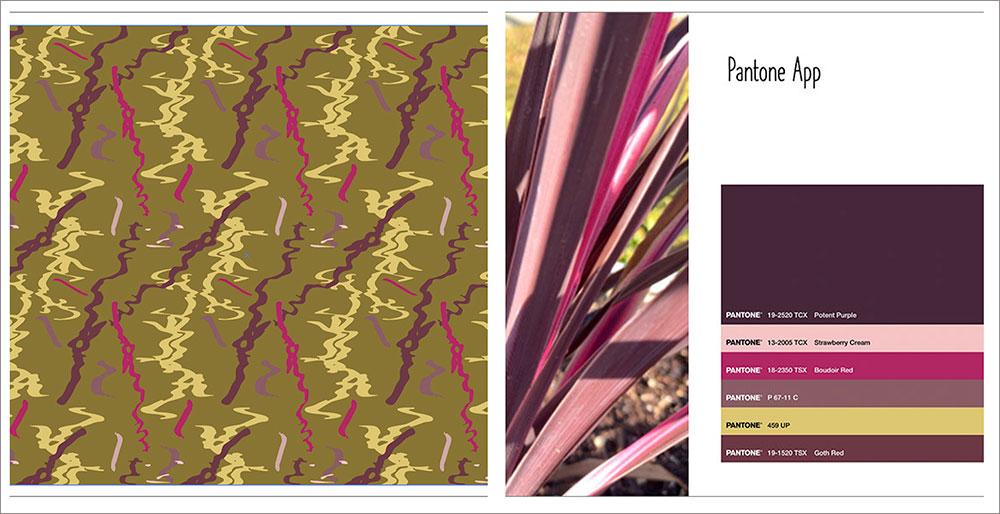
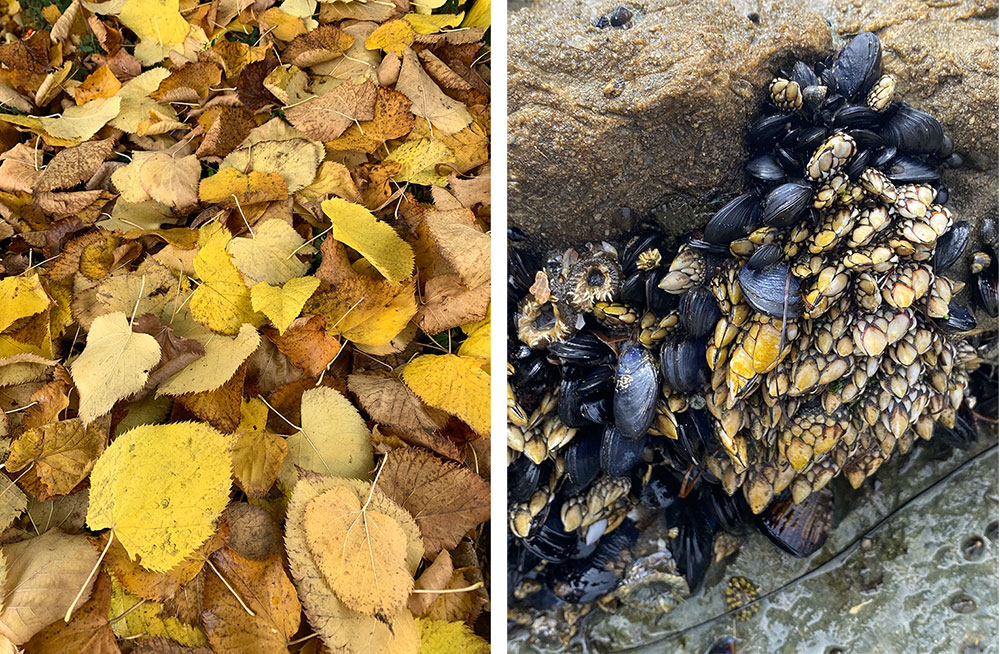
I love to explore and when I am walking or strolling, I am always ‘looking’. I see texture, shapes, but mostly, I see color combinations. So, I will take photos and then use these at a later time. Stored on my iPhone, and saved into a Color album in the cloud, they are always ready for use. Then, when I am ready to embark on a project and am looking for inspiration, I simply scroll through the images.
3. Urban Life
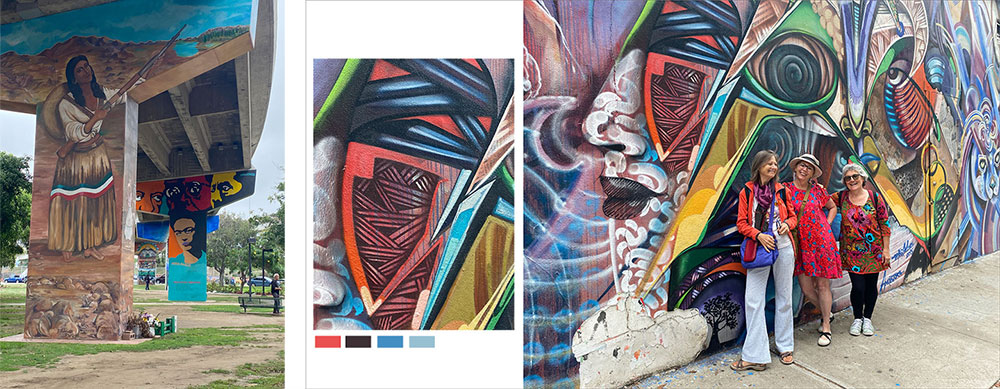
Cities are alive with color through street art, architecture, and cultural diversity. Explore local neighborhoods and document graffiti, murals, and architectural styles. Urban environments often provide a raw and eclectic mix of colors, allowing for bold and unexpected combinations that reflect contemporary society’s vibrancy. Here in San Diego area, I enjoy going to a park called Chicano Park, which is famous for the paintings that have been created on the Pier Columns of the Coronado Bridge as well as walls in the area.
4. Culinary Arts and the Food We Eat
Have you ever seen people taking photos of their food? Maybe it’s not just the presentation they are recording; perhaps it is the colors? Food and fashion are more intertwined than many might think. Chefs consider everything when creating a dish or menu. They express their art through color, texture, and flavor. The vibrant colors of spices, fruits, and plated dishes can inform your color story. Incorporating the rich tones of a sunset meal or the pastel shades of a bakery can cultivate a delicious aesthetic, offering a sensory experience beyond just visual appeal.

5. Clip, Clip, Clip… from Magazines and Pin, Pin, Pin… on Pinterest
As I read through the various magazines and literature that comes my way, I will often clip a page, solely for the color on it. It could be anything; an ad, a photo, artwork, etc. And of course, there is Pinterest. I am constantly pinning fashions, food, quilts, and of course, interesting color combinations I want to keep.
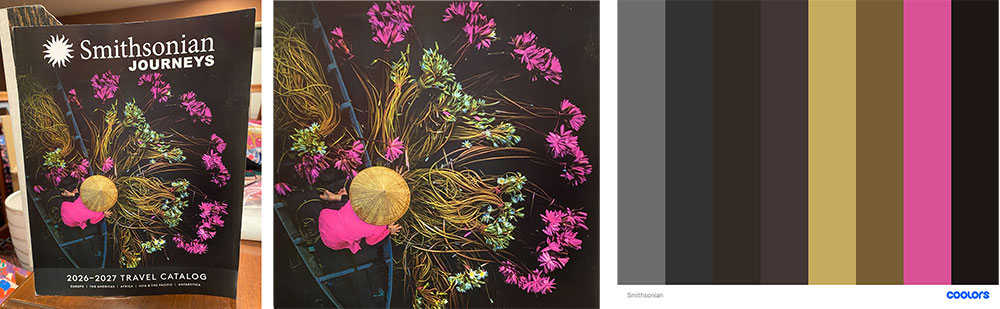
Helpful Aids for Developing Color Stories
Once you have found your inspiration, you then need to extract the colors you want to use from it. I have a few ways I do this:
Visual Simplification and Extraction
This is a non-technology approach. I simply decide on how many colors I want from the image, and then I squint and look at the art and decide what are the most important colors. I like to have one additional color, which I call the ‘zinger’ color (one that isn’t used much but is important – like a streak of orange)
Palette Generator Apps or Online Tools
Technology is great. I have several apps I have used to extract color.
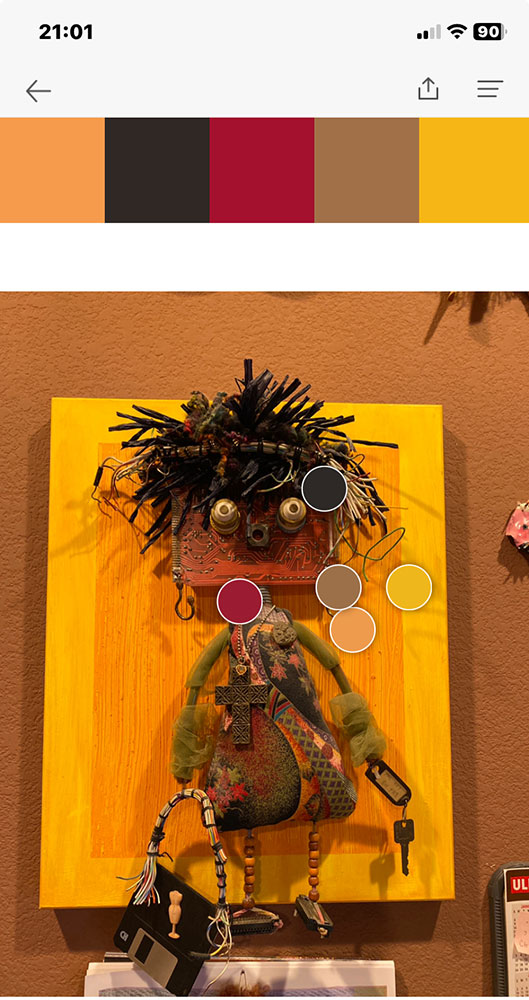
Pantone Apps
Pantone is the global leader of color, providing tools that are used in a large variety of industries. I have used a couple of different Pantone Apps in the past. I particularly like the Pantone Studio app which lets me point my camera at art or other subject matter and it create a palette.
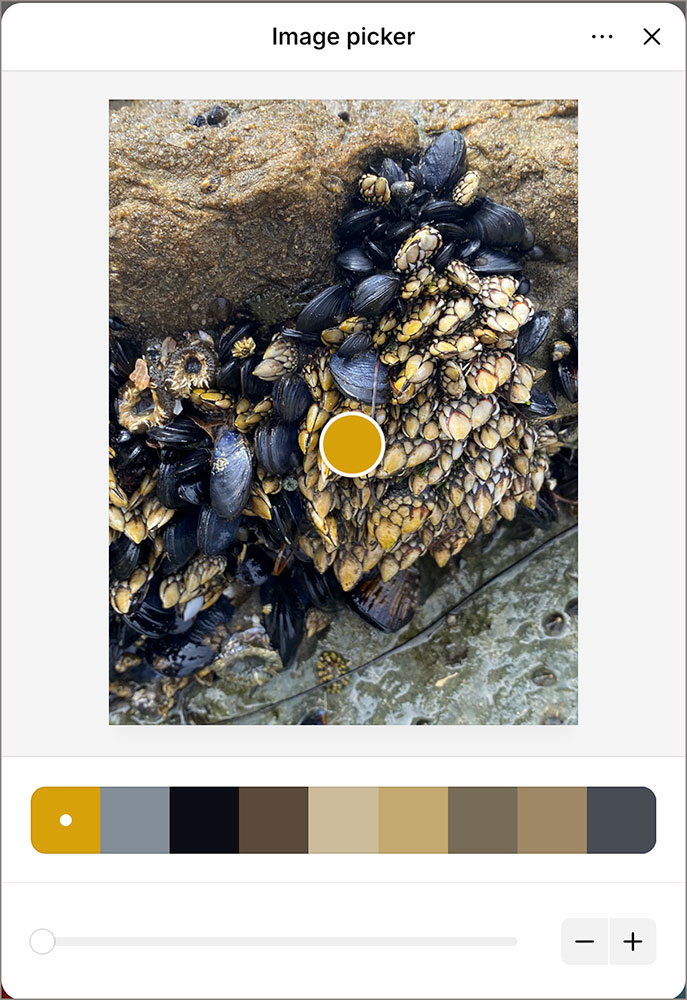
Palette Generator Software. https://coolors.co/
Coolors is an online site that I have used to create palettes. They have a variety of tools but generally, I upload a photo and let the site do the work. I can add or reduce the number of colors I want, and the site delivers. You can export what you get including the palette in a variety of ways. There are numerous features available on the site, related to color and there is also an app.
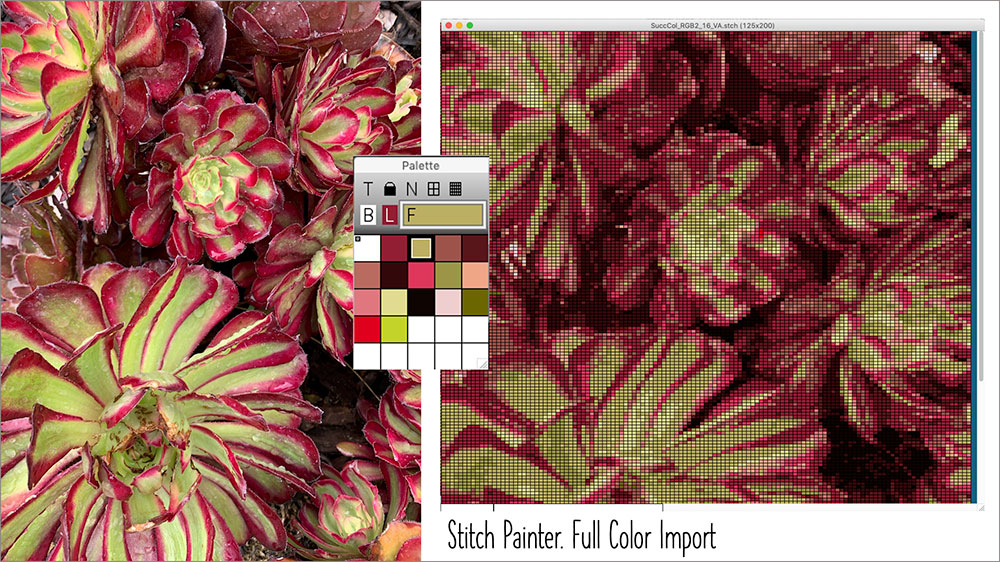
Stitch Painter Software by Cochenille Design Studio
For those who own our grid design program Stitch Painter (and the Full Color Import Module), you can bring an image/photo into the software, color-reduce it, and grid it. Although it is a grid design tool, I often am just after the palette.
Conclusion
Developing a color story for upcoming projects does not always have to follow conventional paths. By tapping into art, nature, food, urban environments, technology, etc., you can create compelling and distinctive color narratives. Use these to curate several fabrics for the next creative piece, or to plan a capsule wardrobe. Or, use the palette as your starting point in the next textile art project. Bypass color theory and enjoy some of the tools that make the creative process really enjoyable!
~~ Susan Lazear, Creative Director of Cochenille Design Studio ~~